MezzoProgram TV na Wtorek 10.02.2026
| 6:09 |
Directed by Franck Podguszer-Braun A pioneer of electronic music, Pierre Henry (1927-2017) has, since the 1950s, alongside Pierre Schaeffer, laid the foundations of what characterizes the music of our time. At the time, everything had to be invented: the sounds, the tools to manipulate them, the ways of broadcasting them. He influenced the pop music of the 1960s and 1970s, from the Beatles to Pink Floyd, and up to the DJs of the 1990s. He is the author of an absolute hit: the electronic jerks composed with Michel Colombier for the 'Messe pour present time' created by Maurice Béjart in 1967. But above all he is the creator of a prolific work, from the end of the 1940s to the 2010s, where pure and incredible sound experiences coexist with musical settings of texts to constitute mock operas of a new genre. Thanks to often unpublished documents, this documentary invites us to listen to Pierre Henry tell us about his journey and above all to listen to his music, one of the most innovative of the 20th century.
|
|---|---|
| 7:03 |
Jeanine De Bique (Soprano) Concerto Köln George Frideric Handel (1685-1759) Overture from Partenope HWV 27 Carl Heinrich Graun (1704/1705-1759) Risolvere non oso from Rodelinda George Frideric Handel Ritorna o caro from Rodelinda HWV 19 Suite from Rodrigo HWV 5 Ouvertüre - Gigue - Sarabande - Matelot Riccardo Broschi (c. 1698-1756) Mi restano le lagrime from L'isola d' Alcina Carl Heinrich Graun L'empio rigor del fato from Rodelinda Leonardo Vinci (c. 1690-1730) Sinfonia from Partenope George Frideric Handel L'alma mia from Agrippina HWV 6 Georg Philipp Telemann (1681- 1767) Rimembranza crudel from Germanicus TWV 21:3b George Frideric Handel Suite from Rodrigo HWV 5 Menuett I - Bourée - Menuett II Che sento? Oh dio! - Se pieta from Giulio Cesare in Egitto HWV 17 Suite from Rodrigo HWV 5 (part 3) Passacaglia Carl Heinrich Graun Tra le porcelle assorto from Cleopatra e Cesare Bayreuth, Margravial Opera House, (Bayreuth Baroque Opera Festival) 8 september 2022
|
| 8:39 |
Rivalry in Music - Furtwängler vs. Toscanini Two men without whom the profession of conductor would not be what it is today. Two men who couldn't be more different from each other: Arturo Toscanini and Wilhelm Furtwängler. The former was rigorously faithful to the musical score, the latter conducted with radical subjectivity. In 1931 they both conducted at the Bayreuth Festival - for the first and last time. Soon the polite rivalry turned into bitter enmity. Both men were forced to take a stand on the regimes in their respective countries - and chose radically different paths. Toscanini, 'the dictator', bravely challenged Mussolini; Furtwängler, a conservative, meanwhile proclaimed that art is always apolitical and reluctantly made a pact with the Nazis. The documentary not only opens up the different musical universes of the two great conductors by retracing their careers in Milan, Bayreuth and New York, but also raises a question that is more topical than ever: what has art to do with politics? Directed by Thomas von Steinaecker 2020
|
| 9:31 | |
|
|
|
| 10:00 |
I Lombardi alla prima crociata 'Dramma lirico' in four acts by Giuseppe Verdi (1813 - 1901) Libretto by Temistocle Solera First performance in Milan, Teatro alla Scala, February 11, 1843 Orchestre de l'Opéra Royal de Wallonie-Liege, Daniel Oren (Conductor) Cheur de l'Opéra Royal de Wallonie-Liege Sarah Schinasi (Stage director) Pier Paolo Bisleri (sets), Françoise Raybaud (Costumes) Marco Ciaponi (Arvino) Goderdzi Janelidze (Pagano) Aurore Daubrun (Viclinda) Salome Jicia (Giselda) Ramón Vargas (Oronte) Roger Joakim (Acciano) Caroline De Mahieu (Sofia) Luca Dall'Amico (Pirro) Liege, Opéra Royal de Wallonie, 23 May 2023 Directed by Stéphane Vérité
|
| 12:23 |
Rivalry in Music - Callas vs. Tebaldi Maria Callas and Renata Tebaldi were the two most famous sopranos of the second half of the last century. Turned into hostile enemies by their admirers, the two became untouchable goddesses of opera. For their fans, Callas was known as 'the tigress', Tebaldi as 'the voice of an angel': the two singers could hardly have been more different, whether in their professional or private lives. To this day, Callas remains perhaps the greatest soprano of all time. Her rival, Tebaldi, is best known to opera lovers. Why is the posthumous fame of the two prima donnas so different? Directed by Andreas Morell 2020
|
| 13:30 |
Gala Plácido Domingo Plácido Domingo (baritone) Jennifer Rowley (soprano) Zhang Zhang (violin) Orchestre de l'Opéra Royal, Laurent Campellone (conductor) Giuseppe Verdi (1813-1901) La forza del destino (overture) Umberto Giordano (1867-1948) Andrea Chénier (Nemico della patria) Francesco Cilea (1866-1950) Adriana Lecouvreur (Io son l'umile ancella) Umberto Giordano Fedora (Intermezzo) Giuseppe Verdi La traviata (Madamigella Valery?) Hector Berlioz (1803-1869) The Roman Carnival (Overture) Ambroise Thomas (1811-1896) Hamlet (O vin dissipe la tristesse) Jules Massenet (1842-1912) Le Cid (Pleurez, pleurez mes yeux) Thais (Méditation) Giuseppe Verdi Il Trovatore (Udiste?... Mira, di acerbe lagrime) Federico Moreno Torroba (1891-1982) Maravilla (Amor, vida de mi vida) Giacomo Puccini (1858-1924) La boheme (Quando men'vo soletta) Franz Lehar (1870-1948) Die lustige Witwe (Lippen Schweigen) Château de Versailles, France, 2 avril 2022
|
| 14:57 |
Pene Pati (tenor), Amina Edris (soprano) Prague Philharmonia, Lukasz Borowicz (conductor) Giuseppe Verdi (1813-1901) Overture to 'Rigoletto' Questa o quella (Duke of Mantua) Rigoletto, Act I Lunge da lei... De miei bollenti spiriti (Alfredo) La traviata, Act II Un di, felice, eterea (Alfredo & Violetta) La traviata, Act I Jules Massenet (1842-1912) Dis mois que je suis belle (Thais) Thais, Act II Charles Gounod (1818-1893) L'amour!... Ah! Leve-toi, soleil! (Romeo) Roméo et Juliette, Act II Valse des fleurs Roméo et Juliette, Act IV Jules Massenet (1842-1912) En fermant les yeux (Des Grieux) Manon, Act II Toi! Vous! - Oui, c'est moi! (Des Grieux & Manon) Manon, Act III Giacomo Puccini (1858-1924) Recondita armonia (Cavaradossi) Tosca, Act I Intermezzo from 'Madama Butterfly' Addio, fiorito asil (Pinkerton) Madama Butterfly, Act II Pietro Mascagni (1863-1845) Cherry Duet (Fritz & Suzel) L'Amico Fritz, Act II Giuseppe Verdi Merce, dilette amiche (Elena) I vespri siciliani, Act V Gioachino Rossini (1792-1868) La Danza Francesco Paolo Tosti (1846-1916) A Vucchella Marechiare L'alba separa dalla luce l'ombra Benjamin Godard (1849-1895) Oh! Ne t'éveille pas encore (Jocelyn) Jocelyn, Act II Prague, Rudolfinum, 31 January 2023
|
| 16:27 |

Rachmaninov revisited Celebrated in his day not only as a great composer, Sergei Rachmaninov was also admired as an outstanding pianist who was a peerless interpreter of his own works including the piano concerti and the Rhapsody on a Theme by Paganini. It is well known that he was in effect the sole pianist capable of performing his most demanding Third Piano Concerto and his performances and recording of the concerto came to be considered as the definitive ones. The relationship between performance, interpretation, and Rachmaninov's own life is addressed in this film by young pianists. They explore the evolution of interpretation over the past few decades with brief excerpts of recordings by Rachmaninov as contrasted with contemporary performances by today's well-known young pianists as they comment on the differences (or similarities) of their approach. Directed by Peter Rosen
|
| 17:18 | |
| 17:50 |
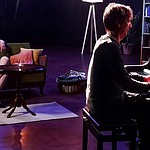
The Sound Weavers: Ludovico Einaudi, Hauschka, Joep Beving, Hania Rani Sold-out concerts, millions of albums sold to make the classical music industry green with envy: neoclassical, as the new musical trend is called, is a mega hit. What makes the form so popular? Is this music skillful or just comforting? Are its composers Mozart 2.0 or rather maestros for the masses? Do they build a bridge to the musical past, allowing our ears to roam comfortably in familiar territory? The documentary traces the journey of some of the protagonists of the genre by telling their stories, and seeking answers from sociologists, neuroscientists, musicologists and even marketing experts. But above all, it allows these creators - these weavers - to have their say. Directed by Anne-Kathrin Peitz 2021
|
| 18:43 |
Tallinn Chamber Orchestra, Estonian Philharmonic Chamber Choir, Tonu Kaljuste (conductor) Robert Wilson (Stage Direction, Set Design & Lighting Concept) Michalis Theophanous, Lucinda Childs (dancers) Arvo Pärt 1935 - Adam's Lament Tabula rasa Miserere Sequentia Directed by Andy Sommer Noblessner Foundry, Tallinn, Estonia, May 12th, 2015
|
| 20:30 |
POPPEA // POPPEA by Christian Spuck Choregraphed by Christian Spuck for Gauthier Dance Music by Martin Donner, Claudio Monteverdi and others Gauthier Dance Emma Ryott - Set designer, costume designer Dunja Funke - Dramaturgy Reinhard Traub - Lighting Eric Gauthier - Dancer Anneleen Dedroog - Dancer Miriam Gronwald - Dancer Anna Süheyla Harms - Dancer Maria Prat Balasch - Dancer Rosario Guerra - Dancer Florian Lochner - Dancer William Moragas - Dancer David Stiven Valencia Martinez - Dancer Tars Vandebeek - Dancer Directed by Nikolai Vialkowitsch Stuttgart, Theaterhaus Stuttgart, 2013
|
| 21:47 |
Marina Viotti (Mezzo-soprano) Orchestre de l'Opéra Royal de Versailles, Andrés Gabetta (Conductor, Violin) Henry Purcell 1659-1695 The curtain tune Timon of Athens Giovanni Porta 1675-1755 Volate gentes, venite cum spe Antonio Vivaldi 1678-1741 Violin Concerto in D Major 'Grosso Mogul' RV 208 Allegro Nicola Antonio Porpora 1686-1768 Salve Regina in F Major Pietro Locatelli 1695-1764 Concerto grosso Op. 1/11 Largo Antonio Vivaldi O servi volate Juditha triumphans RV 644 Ascende lta RV 635 Violin Concerto in B Minor 'Per Signora Anna Maria' RV 387 Canta in prato, ride in monte RV 636 Armatae face et anguibus Juditha triumphans RV 644 Bayreuth, Margravial Opera House Bayreuth, 13 September 2025
|
| 23:11 |
Tannhäuser 'Great Romantic Opera' in 3 acts by Richard Wagner 1813 - 1883 Libretto by Richard Wagner Dresden, Königliches Hoftheater, October 19, 1845 Orchester der Wiener Staatsoper, Philippe Jordan (conductor) Chorus of the Vienna State Opera Lydia Steier (stage direction) Momme Hinrichs (set and video), Alfred Mayerhofer (costumes), Tabatha McFadyen (choreography), Elana Siberski (lighting) Günther Groissböck (Landgrave Hermann) Clay Hilley (Tannhäuser) Martin Gantner (Wolfram von Eschenbach) Daniel Jenz (Walther von der Vogelweide) Simon Neal (Biterolf) Lukas Schmidt (Heinrich the Scribe) Marcus Pelz (Reinmar von Zweter) Malin Byström (Elisabeth) Ekaterina Gubanova (Venus) Ilia Staple (Ein junger Hirt) Vienna, Staatsoper, 25 May 2025
|
| 2:26 |
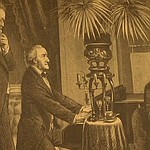
Wagner´s Jews Richard Wagner was notoriously anti-Semitic, and his writings on Jews were later embraced by Hitler and the Nazis. But for years, many of Wagner's closest associates were Jews - young musicians who became personally devoted to him, and provided crucial help to his work and career. Why were they drawn to him? And how could Wagner even accept their embrace? These questions are at the heart of 'Wagner's Jews', the first film to focus on Wagner's complex personal relationships with Jews. Filmed on location in Germany, Switzerland, and Italy, 'Wagner's Jews' reveals this remarkable story through archival sources, re-enactments, interviews, and performances of original musical works by Wagner's Jewish colleagues. Featuring Zubin Mehta and Leon Botstein among others, the film also explores the ongoing controversy over performing Wagner's music in Israel. The same questions asked in Wagner's time still resonate today: is it possible to separate the art from its creator? Can sublime music transcend prejudice and bigotry, and the weight of history? Directed by Hilan Warshaw 2013
|
| 3:19 |
Filarmonica della Scala, Riccardo Chailly (conductor) Sergei Prokofiev (1891-1953) Symphony No. 7 in C sharp minor, op. 131 Pyotr Ilyich Tchaikovsky (1840-1893) Symphony No. 6 in B minor, op. 74 'Pathétique' Festival de Granada, June 25, 2023
|
| 4:39 |
Yerevan Youth Symphony Orchestra, Sergey Smbatyan (Conductor) Sergei Nakariakov (Trumpet) Edvard Grieg 1843 - 1907 Peer Gynt, Suite No. 1 Op. 46 Alexander Arutjunjan 1920 - 2012 Concerto for Trumpet and Orchestra Antonín Dvorák 1841 - 1904 Symphony No. 9 'From the New World' in E-minor Op. 95 Berlin, Konzerthaus, 2 August 2025
|
Lista stacji
O stacji Mezzo
Telewizja Mezzo
Mezzo to francuska stacja telewizyjna skupiająca się na światowej muzyce klasycznej, jazzie i tańcu. Promowana hasłem „Muzyka dla Twoich oczu”, łączy w sobie wrażenia płynące z doskonałego brzmienia i oglądanych występów. Mezzo przenosi widzów do najbardziej prestiżowych sal koncertowych, na deski scen operowych i baletowych oraz w świat znakomitych festiwali muzycznych. W ramówce kanału znajdują się zarówno krótkie klipy, jak i pełnometrażowe przedstawienia prezentujące twórczość legendarnych artystów i nowo odkrytych talentów. Pasmo uzupełniane jest muzycznymi programami i filmami dokumentalnymi. Telewizja Mezzo nadaje swój program przez całą dobę, siedem dni w tygodniu.
Historia telewizji Mezzo
Telewizja Mezzo została założona w 1992 roku przez francuską publiczną grupę mediową France Télévisions. Do roku 1998 nosiła nazwę France Supervision. W 2001 roku Mezzo połączyła się z francuskim kanałem muzycznym Muzzik, zachowując swoją nazwę. Logo stacji składa się z czerwonego napisu „mezzo” ze stylizowaną literą „m”. Siostrzaną stacją telewizji Mezzo jest Mezzo Live HD – kanał nadawany od kwietnia 2010 roku.
Oficjalna siedziba stacji znajduje się w Paryżu we Francji. Obecnym właścicielem jest francuska telewizja publiczna oraz francuska spółka mediowa Grupa Canal+. Aktualnie stacja dociera aż do blisko 60 milionowej widowni i jest dostępna w ponad 80 krajach na całym świecie – w tym w krajach Skandynawskich, w Portugalii, Rosji czy w Polsce.
Od samego początku telewizja Mezzo poświęcona była promocji muzyki klasycznej, jazzu i tańca wśród szerszej widowni. Zamysłem było dotarcie nie tylko do zaprawionych melomanów, ale także osób rozpoczynających przygodę z muzyką poważną. Oferta kanału składa się z programów w różnym formacie. Repertuar obejmuje różne gatunki i formy sztuki klasycznej – m.in. operę, balet, koncerty symfoniczne, jazzowe czy recitalie. Krótko- i pełnometrażowe występy nadawane są w blokach. Przeplatane są programem muzycznym „ InterMezzo ”.
Gdzie można oglądać telewizję Mezzo?
Telewizja Mezzo dostępna jest w Polsce w wybranych sieciach kablowych oraz na największych platformach – Polsat Box i Canal+.
Stacje telewizyjne powiązane z Mezzo
Od roku 2010 oferta nadawcy została rozszerzona o kanał Mezzo Live HD. Emitowane są na nim wyłącznie programy w jakości HD, w tym koncerty i spektakle na żywo z największych scen lirycznych, festiwali klasycznych i jazzowych oraz koncertów z całego świata.
Więcej o telewizji Mezzo
Telewizja Mezzo posiada własną stronę internetową www.mezzo.tv w francuskiej i angielskiej wersji językowej. Prezentowane są na niej nie tylko zapowiedzi transmitowanych spektakli i koncertów, ale też rekomendacje muzyczne, literackie, filmowe czy festiwalowe. Aktualności na temat ramówki i nadchodzących wydarzeń muzycznych umieszczane są na bieżąco również na social mediach stacji, takich jak Facebook, Twitter i Instagram.